What SXSW 2026 Taught Us About Experience Design and Brand Activations
A look at what’s shaping experiential marketing, and how it translates into more intentional, effective experience design.
Employee turnover doesn’t just hurt morale. It can seriously impact your bottom line. In this article, you’ll learn what turnover really costs, how those costs add up, and practical ways to keep your best people from walking out the door.
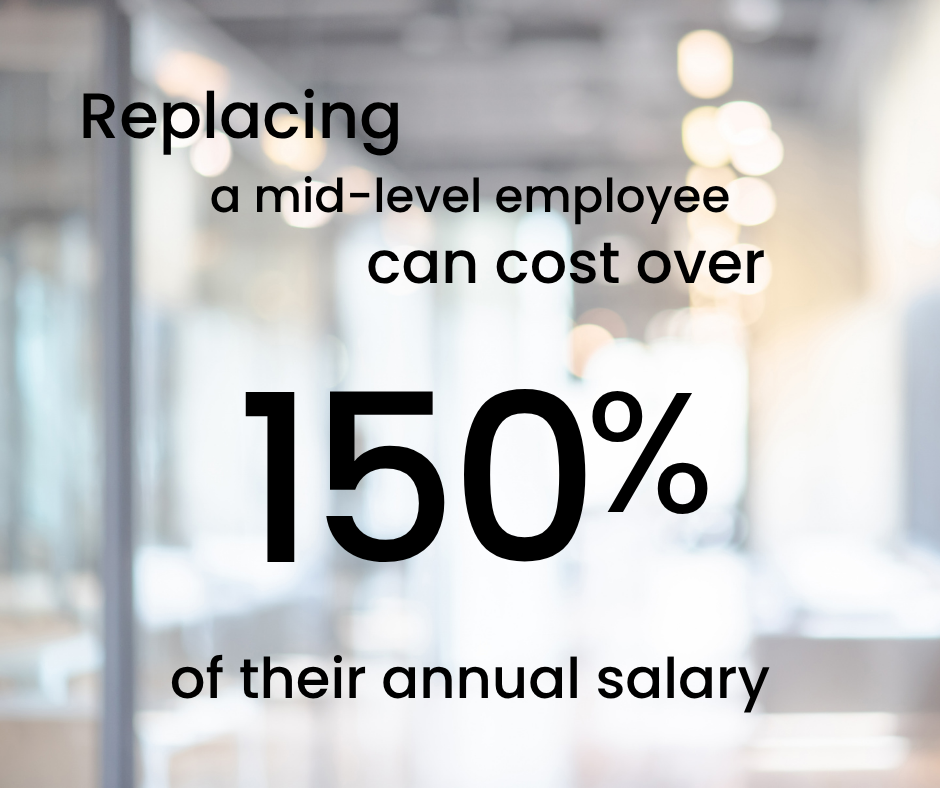
According to the Society for Human Resource Management (SHRM), replacing an employee can cost from 50 to 200% of their annual salary, depending on the level you’re hiring for (entry-level, management, C-suite, etc.). Other sources report values up to 400%:
Via Stratus HR.
There are three important costs that, when combined, add up to the total turnover cost.
Losing a productive, skilled employee costs an organization more than just dollars. It can disrupt leadership, erode trust, and slow innovation, directly impacting company culture.
Common causes of employee turnover include:
There’s good news! A Gallup poll reported that 42% of turnover is preventable. Here are actionable ways to keep employees happy for years to come:
Have More Conversations About the “Big Stuff”
When employees were asked what would have kept them from resigning, 30% reported that additional compensation/benefits would have done the trick. 21% reported that more positive interactions with their manager would have kept them from leaving. Regular check-ins can help with both by giving employees a voice on pay, recognition, and growth.
Offer Competitive Compensation and Benefits
Keeping employees happy means offering competitive starting pay, a robust benefits package, and perks like wellness or incentive programs. Compensation should reflect inflation, cost of living, and performance in addition to skill, experience, education, and job type.
Remove Barriers and Evaluate Structure
Nearly a quarter of preventable turnover could be avoided if managers addressed organizational issues (13%) or problems with staffing, workload, or scheduling (9%). Encourage open dialogue about these issues. When employees feel heard and empowered to offer solutions, it fosters greater engagement and trust.
Focus on Work/Life Balance
Hybrid work schedules have been a big topic since the pandemic, with recruiters saying that these flexible schedules can contribute to increased productivity, improvements to culture, successful attraction of top talent, and reduced turnover. While not every organization can go hybrid, consider options like flexible hours, early-release Fridays, or community volunteer time.
Keep People Motivated Through Incentives
Rewards for a job well done or tenure motivate employees to stay with an organization long-term. The incentives that employees want depend on many factors, including age group. Cash and gift cards are big, but when those are removed as reward options, travel rewards are the most preferred, even above time off and flexible work.

If your current incentive strategy isn’t keeping employees engaged, we can help. Creative Group designs premium rewards programs aligned with your people and goals. From global incentive travel and memorable events to awards and gifts, we’ll help you create experiences that inspire loyalty and performance.
Contact our experts today to get started and help your employees achieve their greatest potential through powerful, purpose-driven incentives.

A look at what’s shaping experiential marketing, and how it translates into more intentional, effective experience design.

A strong event communication strategy does more than promote an event. It guides the attendee journey, builds anticipation, reduces friction, and keeps the experience moving before, during, and after the event.

Employee turnover doesn’t just hurt morale. It can seriously impact your bottom line. In this article, you’ll learn what turnover really costs, how those costs add up, and practical ways to keep your best people from walking out the door.