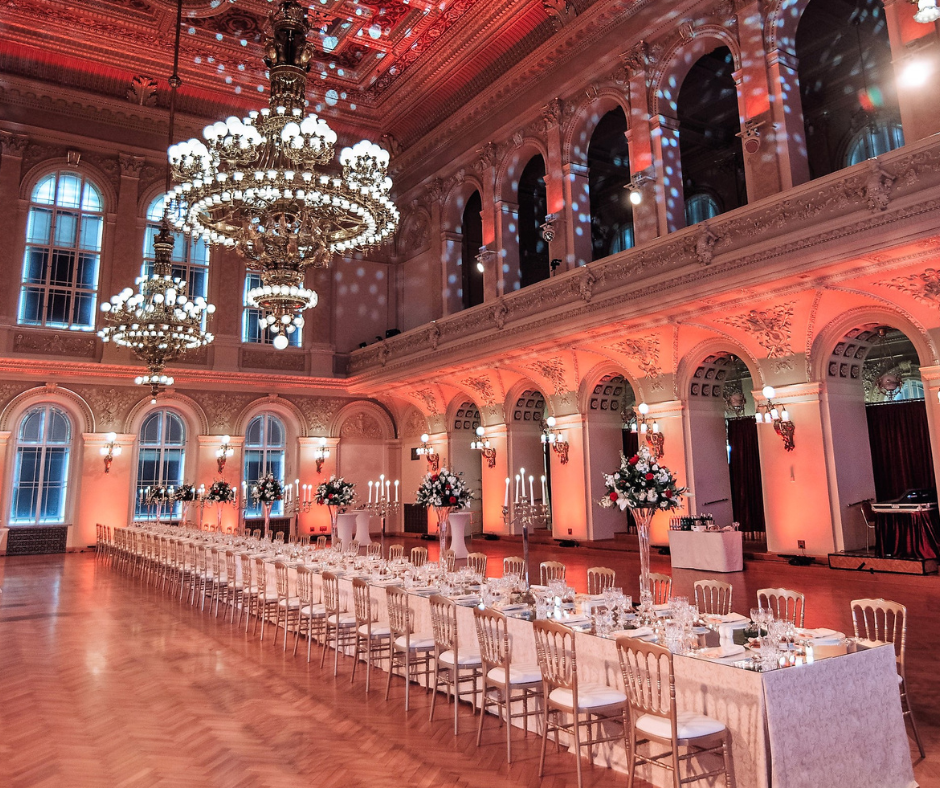
What SXSW 2026 Taught Us About Experience Design and Brand Activations
A look at what’s shaping experiential marketing, and how it translates into more intentional, effective experience design.

Excerpt
Updated October 2026 | 5-min. read
Event communication strategy is the intentional planning of what an audience needs to hear, when they need to hear it, and what each interaction should help them know, feel, or do before, during, and after an event.
Because anticipation does not begin at check-in.
It begins with the first signal that something is coming. The first invitation. The first subject line. The first moment someone decides whether this experience deserves their attention.
And every communication after that either builds on the experience or competes with it.
The opportunity is bigger than sending enough emails at the right time. It is designing a connected communication journey that builds relevance, keeps people engaged, makes participation easier, and extends the value of the experience after everyone goes home.
Most event communication plans begin with dates.
Registration opens. Reminder goes out. App launches. Know-before-you-go. Final countdown.
Those milestones matter. But they tell us when we need to communicate, not necessarily when the audience needs something from us.
What are people thinking when they first hear about the event? What might make them interested enough to register? What questions or friction could appear along the way? When do they need inspiration? When do they simply need clarity?
That shift changes communications from a list of deliverables into part of the experience itself.
“A stronger event communication strategy starts with the attendee journey.”
Anticipation builds when communications evolve with the audience.
Communication strategy gets smarter when you can see how people are responding.
Registration pacing, email engagement, content interaction, app adoption, session behavior, polling, and attendee feedback can all provide useful signals.
The point is not to collect more data.
It is to notice what the audience is telling you.
Where did interest increase? Where did people stop responding? Which messages led to action? What questions kept appearing? Where did friction show up?
Those insights can inform what happens next, both within the current program and in the experience that follows.
That is where data-driven design becomes especially useful: data moves from something we report after the fact to something that helps shape the experience.
A good communication calendar tells you what goes out when.
A strong event communication strategy goes further.
It considers what the audience needs at each stage, what each message should accomplish, and how one interaction prepares people for the next.
That is the shift:
Because the best event communications do more than fill the space between registration and arrival.
They become part of the experience.
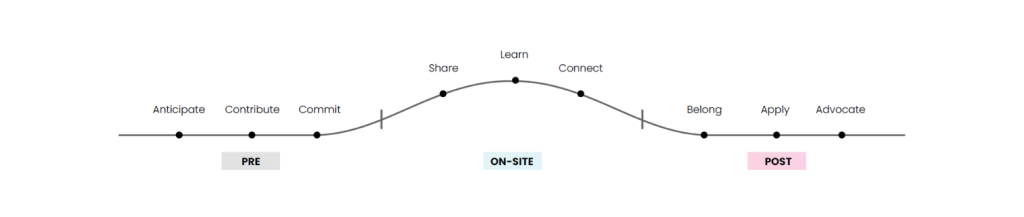
An event communication strategy should outline audiences, objectives, messaging, channels, cadence, key touchpoints, ownership, and measurement across the pre-event, onsite, and post-event journey.
That depends on the event and audience, but communication should begin when there is something relevant and useful to say, not simply when the countdown feels close enough. Longer planning cycles create more opportunity to build familiarity and value over time.
There is no universal cadence. Frequency should reflect the audience, event complexity, timing, and purpose of each message. Every communication should earn its place.
Look beyond opens and clicks. Consider the actions communications are meant to influence, such as registration behavior, app adoption, participation, session engagement, feedback, and other program-specific outcomes.
We see event communications as part of experience design.
The same thinking that shapes the event itself should shape how people encounter it before they arrive, how they navigate it while they are there, and what stays with them afterward.
That means starting with the audience, being intentional about every touchpoint, and using what we learn along the way to make smarter decisions.
This perspective is informed by Creative Group’s experience designing meetings, events, incentive travel programs, and engagement strategies for leading organizations, along with relevant industry research and behavioral science principles.
What if every message had a job to do?
From the first invitation through the final follow-up, we can help design a communication journey that keeps people interested, informed, and connected to the experience.

A look at what’s shaping experiential marketing, and how it translates into more intentional, effective experience design.

A strong event communication strategy does more than promote an event. It guides the attendee journey, builds anticipation, reduces friction, and keeps the experience moving before, during, and after the event.

Employee turnover doesn’t just hurt morale. It can seriously impact your bottom line. In this article, you’ll learn what turnover really costs, how those costs add up, and practical ways to keep your best people from walking out the door.